"A smoker would theoretically have to consume nearly 1,500 pounds of marijuana within about fifteen minutes to induce a lethal response."
"In strict medical terms marijuana is far safer than many foods we commonly consume. For example, eating 10 raw potatoes can result in toxic response. By comparison, it is physically impossible to eat enough cannabis to induce death."
"Marijuana, in its natural form, is one of the safest therapeutically active substances known to man."
~ In The Matter of MARIJUANA RESCHEDULING PETITION
by FRANCIS L YOUNG, Administrative Law Judge
"Findings of Fact, Conclusions of Law and Decision." for the United States Department of Justice and Drug Enforcement Agency (DEA) September 6, 1988
It was an absolutely beautiful day, after a week of heavy rain throughout Southern Ontario it was quite a relief that the bright and shining Sun had come out to greet us! Preparing to begin our trek throughout the streets of downtown T.O. and before our group had a chance to completely assemble, our Alliance was split up at the launch point - the energy of the growing crowd pushed forward and the marchers were raring to get started! Fortunately it all worked out as those of us not right at the front remained to accompany our Prohibition-era Ford from Good Fellas Limo. Complete with our very own "Al Capone" Chauffeur, the sweet ride was able to idle throughout the parade route and catch the eye of interested onlookers.
Michelle our Belle - the most photographed woman of the day! And our very own "Al Capone" - Thanks Harold!
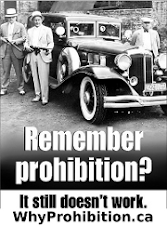
The day’s most creative protest was staged by the National Organization for Reforming Marijuana Laws (NORML) Women’s Alliance. The NORML women dressed up in 1920s costumes and were followed by a car of a similar vintage, driven by a man dressed as Al Capone. According to NORML media spokesperson Andrea Matrosovs, the Women’s Alliance wanted to make plain the connection between the prohibition of alcohol in the 1920s and ’30s—which was a boon to organized crime—and marijuana prohibition today.
“When women gathered together in the ’20s and ’30s, they made things happen,” she said. “And it was to the benefit of families, and the dis-benefit of organized criminals.”
Matrosovs was somewhat unique among Saturday’s demonstrators. She doesn’t smoke marijuana at all. Her interest in legalization comes purely as a result of her social-science background and the time she spent as a high school teacher.
“If we could legalize, regulate, and tax, then we could take those revenues that are currently going to organized crime and direct them to good things,” she said. “My background is as an educator…and it bothered me that our youth were being funneled into alcohol, because that’s legal in our society at age 19, where marijuana isn’t.”
*****
MyETVmedia
interview with Jodie Emery of Cannabis Culture and the NORML's Women's
Alliance at the 14th. annual Toronto Global Marijuana March @ Queen's
Park.
"An estimated 15,000 people gathered at Queen’s Park on Saturday afternoon for the Toronto Global Marijuana March, and The Grid was there to find out why the event is so popular.
"Along the way, we encountered members of the NORML Women’s Alliance of Canada, who gathered in elegant 1920s costumes to protest the current prohibition of marijuana..."
Once again, my camera failed me but not before I took the above pictures* leading up to the start of the March. I'd like to thank Wendel Grant and Alison Myrden for letting me share some of their great photos (below) from the awesome day, Thanks! (To see these great pictures enlarged, "Click" on them.)
NORML Women getting approval from the growing crowds
and passing motorists.
The Grand Parade Marshals!
Leading the way!
Alison's Photos
Alison and the NORML Woman's Alliance marching alongside Jodie Emery.
Cannabis = Zero deaths. Ever.
Kelly and Alison - NORML Women inspiring us all!
It
was a privilege to gather
with such an incredible group of people who honestly care about
our fellow human beings and Mother Earth. Kudos to you, my fellow
NORML
Women, I'm glad to have marched alongside every single one of you.
Just like the Sabine's contributed to end the Noble Experiment all those
decades ago, NORML Women will campaign** to bring about an end to the unjust Drug War today. We're "Women On a Mission to End Prohibition" - take that, Steve!
For anyone who didn't get a chance to watch "Prohibition" - the phenomenal 3 part documentary by Ken Burns and Kim Novick - you're in luck! PBS has gone all out and created an absolutely amazing web experience worthy of sharing so go check it out, and tell your friends!
NORML reports: "In May 1929, Pauline Sabin founded the Women's Organization for National Prohibition Reform (WONPR). It was a platform for women who were demanding the repeal of the 18th amendment forbidding the manufacture and sale of alcohol. Known as the Sabin women, the leadership of the WONPR consisted primarily of the nonpartisan wives of leaders of American industry. In a little over a year, almost 1.5 million Sabin Women were publicly calling for an end to prohibition-inspired violence and political malfeasance related to the illegal production of alcohol." ~
Jodie Emery is one of the strongest leaders in the cannabis legalization movement. Wife to imprisoned activist Marc Emery, Jodie has become a voice to be reckoned with in her own right. Mrs. Emery will also be at the front leading the Global Marijuana March alongside the NORML Women's Alliance of Canada.
*****
Follow the NORML Women's Alliance on Twitter: NORMLWomen'sAlliance - @NORML_CWA Join and "LIKE" the new Facebook Page for the NORML Women's Alliance of Canada.
* - FOR IMMEDIATE RELEASE - APRIL 27, 2012The NORML Women’s Alliance of Canada Leads The 14th Global Marijuana March The NORML Women’s Alliance of Canada is pleased to announce we have been chosen to lead the 14th Toronto Global Marijuana March(GMM) throughout the city on Saturday, May 5, 2012. The GMM takes place annually in over 100 cities across the globe and will attract upwards of 20,000 cannabis enthusiasts and anti-prohibitionists to downtown Toronto alone. We believe that women will once again be a successful, driving force towards ending prohibition. In the spirit of the day the NORML Women's Alliance of Canada has chosen to honour those women who bravely campaigned for an end to alcohol prohibition in the 1920s and ‘30s by dressing in attire reminiscent of this era. The peaceful protest will assemble at 11 a.m. and launch at 12 p.m., north of Queen's Park North at Charles Street. It will traverse north to Bloor Street, east to Yonge Street, south to Gerrard Street and east to Church Street. After the march, the crowd will disperse to several marijuana-friendly events across the city. Members of the NORML Women's Alliance of Canada are mothers, grandmothers, daughters, sisters, and caregivers of this nation. We are calling on the Canadian Government to end cannabis prohibition, re-prioritize spending to focus on our families, education, health care and a mandate to protect Canadians from being damaged any further by this harmful, tried and failed government policy. The NORML Women’s Alliance of Canada is a non-partisan coalition of socially and geographically diverse women from coast to coast to coast who believe that marijuana prohibition is a destructive and hypocritical policy that undermines the Canadian people, sends a mixed and false message to our youth, and destroys the cherished principles of personal liberty, freedom and sovereignty belonging to all Canadians. NORML Women’s Alliance of Canada
My response to this article: It's time for Canada and all nations to admit that the War On Drugs is lost, in fact, just like The Noble Experiment it could never have been won to begin with. We do not respect the laws of drug prohibition because they are unenforceable. To prohibit the use of a plant that we have used for thousands of years for medicine, relaxation, paper, food, fabric, fuel, etc. is not only unjust, but an impossible endeavor. I respect laws that are created to keep society safe from truly violent and dangerous people. As a Mother I believe a majority of police and judicial resources must be focused on those who truly pose a threat to society. But the law of Cannabis Prohibition is so ridiculous that it causes disrespect for the law and law enforcement, which is a shame because there are many great police, lawyers, judges, etc. out there who really do care about people, most notably members of L.E.A.P. ~ Law Enforcement Against Prohibition. Politicians must concede that they cannot legislate human behavior when it comes to what we eat and drink, how we medicate or what we grow in our gardens. It is the ultimate persecution of our freedom(1) of personal autonomy and wreaks of ownership! We're not perfect, we're Human, we use drugs, we always have, deal with it! The mere notion that government believes laws can stop plants from growing in the ground is ludicrous. End the Drug War that empowers and enriches cartels and organized criminals. Provide truthful facts to our children about all substances and regulate the sale of drugs to adults. Revive the farming of the Industrial and food grade Hemp plant the world over so we can help our environment and conquer famine and malnutrition. We can concentrate on more important things like our disastrous economy, health care, school boards and old and failing infrastructures. Every taxpayer dollar we spend fighting this unwinnable war is a dollar stolen from proven programs that really do help support the health and safety of all of us. When it comes to paying for helicopters flying through the air searching for plants(2) or schools and hospitals, I know without a doubt where I want my tax dollars to go!
via YouTube: David Bratzer, a police officer in British Columbia, Canada, says he has seen how marijuana prohibition and the failed "war on drugs" directly lead to the growth of organized crime and cause gruesome illegal market violence. David is a member of Law Enforcement Against Prohibition, which anyone can join for free atCopsSayLegalizeDrugs.com
"The Law Makes Us Lawless" The awesome Ken Burns and Lynn Novick documentary "Prohibition" can be viewed at PBS online.
"I, as a responsible adult human being, will never concede the power to anyone to regulate my choice of what I put into my body, or where I go with my mind. From the skin inwards is my jurisdiction, is it not? I choose what may or may not cross that border. Here I am the Customs Agent. I am the Coast guard. I am the sole legal and spiritual government of this territory, and only the laws I choose to enact within myself are applicable."
Broadway Books is happy to celebrate its new publication and anyone who pre-orders a copy of Heart of Dankness before April 3rd. – via ANY retailer – will receive a Goodie Bag with rolling papers, a signed bookplate, and an entry to win a copy of Jason King’s amazing Cannabible boxed set. It's Contest-y Goodness!
Pic courtesy of http://heartofdankness.tumblr.com/
"In Heart of Dankness: Underground Botanists, Outlaw Farmers, and the Race for the Cannabis Cup author Mark Haskell Smith guides us through the fascinating world (and underworld) of high-end cannabis. While reporting on the Super Bowl/Mardi Gras of the marijuana world, the international competition held annually in Amsterdam known as the Cannabis Cup for the Los Angeles Times, Smith sampled some rare high-grade weed in an Amsterdam coffee-shop, which left him relaxed, happy, lucid, and energetic—anything but stoned. He realized this weed had a superior smell, taste, and high, the “dankness” so sought after by true pot connoisseurs. This intrigued him so much that he set off on a quest for what brings about these qualities.
"If drug gangs in Mexico are successful enhancing the quality of their product, they can sell the improved marijuana for up to five times the normal price. The going rate for top quality U.S. marijuana is around $2,500 per pound, while Mexican types sell for under $500, U.S. law enforcement officials say." ~ Mexico marijuana growers learn new tricks from US
My response:
"They say its used for pain management, but drinking a bottle of Jack Daniels would have the same effect,"
Yes, but the difference is that the bottle of Jack Daniel's can kill you, while the Cannabis can't. That is, unless you can ingest approximately 1500 pounds of it within 15 minutes.
Like fine wine, people will pay good money for quality cannabis. The Mexican cartels have recognized this truth and are upping their game to compete in the black market opposite "Primo" California bud."
C'mon, we can't be surprised by this - we all know that Cannabis is worth more because it's illegal. The best solution to stop the drug war violence is re-legalization and regulation, a controlled production, quality tested, sales industry much like what already exists for the previously banned alcohol. The bonus will be tax revenue, legitimate jobs in an already booming, established market, and taxpayer savings through lower legal, court, incarceration and probation costs. Plus, Industrial Hemp is a plant mine eagerly waiting to prosper, so the environment also wins.
CON JOB: verb-transitive ~ To swindle (a victim) by first winning his or her confidence; dupe.–noun ~ A swindle. –adjective ~ Of, relating to, or involving a swindle or fraud: a con artist.
ALARMIST: person or group/organization who needlessly alarms or attempts to alarm others, as by inventing or spreading false or exaggerated rumors of impending danger or catastrophe.
In a cheap attempt to sway uninformed Canadians into voting for them, the Conservatives continue to be alarmist, trying to convince you that Canada is bursting at the seams with dangerous criminals lurking on every corner like a Boogeyman in your closet. Harper, Toews, Nicholson, Glover et al want you quivering, believing that no one can save you and your family from becoming victims except for the "Tough on Crime!" party! The kicker? Crime has actually been declining in Canada, in fact, crime rates fell by about about 3% in 2009 — 17% lower than a decade ago. Joseph Neuberger puts some context to this: "The last time Canada's crime rates were as low as Statistics Canada says they are now, The Sting and American Graffiti played at the movies; Pink Floyd's Dark Side of the Moon ruled the airwaves and M*A*S*H was tops on TV." (Please read the whole awesome article Tough on Crime Bill Is Tough on Us All)
The following is from a previous post I wrote called "Calling the Tories Out on Bill C-15 - "The Politics of Fear". This information is applicable to Bill S-10 and deserves to be highlighted as the Conservatives continue to attempt to label the opposition as *soft on crime and pull one over on Canadians who are unfamiliar with the consequences of Mandatory Minimum Sentencing from drug offenses:
The judiciary in Canada and elsewhere are opposed to mandatory sentences of imprisonment. The Canadian Sentencing Commission (1987) found in their survey of judges that slightly over half felt that minimum sentences impinged on their ability to impose a just sentence and that inappropriate agreement between defense and Crown counsel may result.
The future of mandatory minimum sentences in Canada remains unclear. There is some indication that minimum sentences are not an effective sentencing tool: that is, they constrain judicial discretion without offering any increased crime prevention benefits. Nevertheless, mandatory sentences remain popular with some Canadian politicians.
Where mandatory sentences do exist, they have been the object of considerable (and growing) opposition from a variety of parties, including advocacy groups, judges, academics and criminal justice professionals. This opposition has led to a number of Bills to amend or repeal the mandatory sentences legislation. While a number of countries have passed mandatory sentencing legislation within the last decade, there is evidence that jurisdictions with the most severe mandatory sentencing laws are beginning to repeal, or consider repealing, the most punitive sentences of imprisonment.
Trends in Mandatory Sentencing Legislation - After a decade in which a number of common law countries enacted mandatory sentencing legislation, there is clear evidence that several jurisdictions are now either repealing or amending these punitive laws. For example, in 2002 the Michigan mandatory sentencing laws were significantly amended. The effects of these amendments include the following:
• elimination of mandatory minimum sentencing for certain controlled substance violations; • creation of provisions that permit courts to consider important mitigating factors; and • revision of the quantities of drug that trigger certain sentences.
This movement towards a more flexible, judge-determined sentencing scheme is a result of several factors with international repercussions including:
• a shift in public opinion away from supporting strict mandatory minimum sentencing (see above); • the impact of Advocacy groups such as Families Against Mandatory Minimums Foundation (FAMM); • growing public disenchantment with the “War on Drugs” that initially triggered many of the most punitive mandatory sentencing laws (see Eagleton Institute of Politics Center for Public Interest Polling, 2004); • news media coverage of “three-strikes” cases in which offenders whose “third strike” consisted of a less serious felony and stories of offenders receiving lengthy prison terms for offenses such as stealing a bicycle from a garage have undermined public support for this kind of sentencing; and • growing concern among criminal justice professionals that mandatory sentences have played an important role in keeping prison populations from declining, even in an era of falling crime rates.
Mandatory Sentencing and Public Opinion - Although this report deals only with the statutory regimes with respect to mandatory sentences of imprisonment, it is worth noting that there is evidence from a number of jurisdictions that public support for mandatory sentencing has declined over the past decade. Mandatory sentences of imprisonment represent the most punitive sentencing reforms of recent years and are found in many western nations. Often justified by reference to public opinion, they have proved highly controversial in practice. Where do members of the public stand with respect to the issue? Few studies have addressed public knowledge of statutory minimum penalties; fortunately, the surveys that exist on this issue have generated the same findings: the general public has little knowledge of the offenses that carry a mandatory minimum penalty, or of the magnitude of the statutory minima. For example, in 1998, members of the public responding to the British Crime Survey (BCS) were asked if they were aware of the mandatory minimum prison term of three years for offenders convicted of burglary (see Roberts, 2003).
Even though this mandatory sentence had been the object of considerable media attention, less than one quarter of the sample responded affirmatively. This finding is consistent with earlier research in Canada that found that very few members of the public had any idea which offenses carried a mandatory sentence (Roberts, 1988 - It should not be surprising that public knowledge of mandatory sentences is poor. Opinion surveys conducted in several jurisdictions have shown that the public knows little about maximum sentences, sentencing options, alternatives to imprisonment, sentencing patterns, recidivism rates, or many other elements of the sentencing process (see Roberts and Hough, 2005, for a review). For example, respondents may overlook the fact that mandatory sentences of imprisonment violate important sentencing principles such as proportionality in sentencing. In addition, mandatory sentences of imprisonment may prove expensive by increasing the costs of the correctional system as more offenders are admitted to custody (and for longer periods of time).)
There is clear evidence that even in the United States, where support is stronger for mandatory sentences, public support for the concept is declining. For example, in 1995 over half of the sampled public in the US held the view that mandatory sentences were a good idea (Roberts, 2003). In 2001, this percentage had declined to slightly more than one-third of respondents (Peter D. Hart Research Associates, 2002; Roberts, 2003). In fact, over half the polled public in the US now favour the elimination of “three-strikes” mandatory sentences (Peter D. Hart Research Associates, 2002). The most recent polling on the issue of mandatory sentencing comes from the state of New Jersey. When asked whether mandatory jail or mandatory drug treatment was the more effective approach to non-violent offenders, respondents chose treatment over imprisonment by a three to one ratio (Eagleton Institute of Politics Center for Public Interest Polling, 2004). Three-quarters of the sample favoured allowing judges to set aside mandatory sentences “if another sentence would be more appropriate” (Eagleton Institute of Politics Center for Public Interest Polling, 2004).
The Future of Mandatory Sentencing - It would be overstating the case to say that the pendulum has swung away from mandatory sentencing to a model of sentencing that privileges judicial discretion. However, it is clear that public and legislative interest in mandatory sentencing laws has declined, and is likely to continue to decline in the near future. Although the public supports tough sentencing measures for violent offenders, the experience with mandatory sentencing legislation in a number of countries has shown that these laws do little to promote public confidence in the sentencing process.
This report has demonstrated that while mandatory sentences of imprisonment proved popular in the 1990s across a number of common law jurisdictions, closer examination of the laws reveals that many countries allow courts the discretion to sentence below the minimum when exceptional circumstances exist. This usually means that courts are permitted to consider mitigating factors relating to the offense or the offender, in some cases, as long as the judge provides written reasons for doing so. In addition, while the general public appears to favour the use of mandatory sentences for offenders convicted of the *most serious offenses and repeat offenders, there are important limits on public support for strict mandatory sentencing laws. When the public is provided with more information regarding the law and the circumstances surrounding the offense and the offender, the tendency is not to favour punitive sanctions such as mandatory minimum sentences.
*most serious offenses ~ s. 718.1 of the Criminal Code of Canada states: "sentences should be proportionate to the offense and reflect the degree of responsibility of the offender."
Thomas Gabor, Professor Department of Criminology University of Ottawa Nicole Crutcher Carleton University Research and Statistics Division January2002
An excerpt from section 5.4 Mandatory Sentences for Drug Offenses states:
Some of the most sophisticated research in this area has been undertaken at the Rand Corporation (Caulkins et al., 1997). Through various mathematical models, Rand researchers compared the cost effectiveness of various drug prevention/control strategies, including lengthy MMS. Their analysis considered the cost of each strategy and the expected yield in terms of both drug consumption and crime reductions. Their conclusion was that conventional sentences imposed on dealers are more cost effective than long MMS reserved for fewer offenders and that treating heavy users is more cost effective than either approach in lowering drug use or drug-related crime. MMS were found to be the most cost effective strategy only in the case of the highest level dealers; however, the low thresholds at which MMS tend to kick in means that these laws are more likely to ensnare low-level offenders. Also, high-level dealers are more likely to avoid MMS, as they are in a better position to have information to trade for an exemption from these penalties. Finally, these investigators note that the time horizon of evaluations is critical, as MMS become less cost effective over time.
Hansen (1999) asserts that the tide is turning against MMS for drug infractions. He notes that they have done little to reduce crime or to put large-scale dealers out of business. Rather, they have filled prisons with young. low-level, non-violent individuals at great cost to taxpayers. Hansen points out that, in Massachusetts, 84% of inmates serving mandatory drug sentences are first-time offenders.
...MMS fail to discriminate between these hardcore drug dealers and those who feel compelled to sell due to an addiction or difficulties encountered in participating steadily in the work force. The implication is that employment opportunities, more accessible drug treatment, and alternative sentences would be preferable to the “iron fist of the war on drugs.”
Harsh MMS and the “drug war” approach in general show little effect in relation to drug offense. Judges routinely circumvent the “mandatory” death sentences for drug trafficking in Malaysia and the tough MMS in the US have imprisoned mostly low-level, nonviolent offenders. MMS do not appear to influence drug consumption or drug-related crime in any measurable way. A variety of research methods concludes that treatment-based approaches are more cost effective than lengthy prison terms. MMS are blunt instruments that fail to distinguish between low and high-level, as well as hardcore versus transient drug dealers. Optimally, it would appear that tough sentences should be reserved for hardcore, high-level dealers, while treatment may be more appropriate for addicted dealers and employment opportunities may be more cost effective in relation to part-time dealers who are underemployed.
Conclusion: 9.5 Mandatory Sentences for Drug Offenses
Severe MMS seem to be least effective in relation to drug offenses. Studies using a variety of methodologies seriously question the value of the “drug war” approach. The draconian penalties in Malaysia are routinely circumvented by the judiciary and the tough MMS in the US (both at the state and federal levels) have imprisoned mostly low-level, nonviolent offenders. Drug consumption and drug-related crime seem to be unaffected, in any measurable way, by severe MMS. Both mathematical modeling techniques and field work arrive at the conclusion that treatment-oriented approaches are more cost effective than harsh prison terms.
9.9 Concluding Remarks
From a utilitarian point of view, incarcerating occasional, non-violent offenders, for substantial periods, constitutes a colossal waste of justice system resources.
...Therefore, MMS should not be introduced merely to placate a political constituency or without regard to a thorough understanding of the infractions or offenders for whom they are intended. ~ Fin
*****
"Discretion is a science of understanding, to discern between falsity and truth, between wrong and right, between shadows and substance, between equity and colourable glosses and pretenses, and not to do according to their men's will and private affections." ~ Justice Edward Coke
*****
What purpose does it serve the Conservatives to quash judicial discretion? To disregard evidence and research that clearly demonstrates that Mandatory Minimum Sentencing is ineffective, expensive and a fallacious approach regarding drug policy and criminal legislation? I ask my fellow Canadians, "Are YOU comfortable with the knowledge that your government blatantly ignores the findings of our very own Justice Department?"
Prevention. It's worth more than a pound of Tory rhetoric for Canadian families and hard working taxpayers. Lets ignore the Con Job, Canadians, of course we are all concerned about crime, but lets be brave and approach solutions to keeping our kids and communities safer by being smart, logical and realistic about crime policy.
Ignoring evidence that clearly proves that Mandatory Minimum Sentences escalate crime and violence in our neighbourhoods? Now that's scary!
Fortunately, we can see what has happened in the United States when a government is "Stupid on Crime" because they don't want to be labeled "Soft on Crime".
*****
“Still, my own personal view is that it’s a mistake to take away discretion from judges, In the last couple of decades, the U.S. has gone the way of mandatory sentencing for a whole bunch of crimes and the result is their prisons are jammed.
I find it hard to understand how the richest country in the world has one of - if not the - highest prison population in the world. There’s something wrong there, and the problem is mandatory sentences. I’m disappointed to see Canada drifting in that direction.” ~ Retired Quebec judge John Gomery
*****
*soft on crime ~ From: It's a 'myth' Canada is soft on crime It is a myth that Canadian courts are soft on crime and that the Charter of Rights is responsible for criminals escaping conviction or receiving light jail terms, says Canada's chief justice, Beverley McLachlin.
The Charter of Rights, signed on April 17, 1982, as part of the repatriated Constitution, gave judges the power to not merely interpret laws, but to strike them down if they were found to violate any of the established rights.
They include freedom of religion, expression and association, the legal right to life, liberty and security of the person, and the right against unreasonable search and seizure. Equality guarantees, including freedom from discrimination based on age, sex, race, or disability, came into effect in 1985.
Parents, this is not a bill aimed strictly at cartel kingpins as the Tories would have you believe. No, this wolf in sheep's clothing will have our sons and daughters, aka "easy police prey", thrown in prison because they prefer to use cannabis, a much safer substance than legal alcohol and nicotine filled cigarettes. Many college students will grow a small amount of plants for themselves and a few friends so they don't have to come into contact with drug dealers, certainly this is not Organized Crime! Under Bill S-10 the "serious crime" of baking a batch of Pot Brownies will demand a judge hand down a mandatory minimum sentence of no less than 18 months imprisonment (Seriously.) and even the simple action of passing a joint is deemed "drug trafficking".
I've stated many times throughout my blog that of course we would prefer our youth to not use any drugs at all, be it alcohol, nicotine, caffeine, cannabis, oxycondon, ecstasy, etc. But the reality is that many will experiment (as millions of us did in our youth) with different substances. In this case, we certainly wish that if they are unfortunately caught by police, they NOT be persecuted and sent to prison with violent criminals! And if your child fell victim to drug addiction, would you rather them receive counselling and rehabilitative help? Or be locked up and punished alongside dangerous felons?
Stand up, Canadian Parents! It's time to get educated - we must refute ideological drug war rhetoric and defend the civil rights and safety of our children! Prohibition legislation creates and causes violence in our neighbourhoods. Let's be the "Smart On Crime" Generation that demands our government put public safety and common sense first - we can start by defeating Bill S-10 in the House of Commons. I ask that you please contact your Member of Parliament and request that they do the right thing by our kids and fellow Canadians and VOTE NO on Bill S-10!!!
U.S. Surgeon Gen Joycelyn Elders: Legalize Marijuana! "We Criminalize People At The Highest Rate In The World!"
"Incarcerex" - Steve's solution to fill Canadian taxpayer funded prisons with cannabis consumers.
"Cannabis use, however, was generally infrequent, with 45.7% of previous-year users reporting use two or fewer times during the previous three months. In addition, most users did not report experiencing serious harm due to their cannabis use."
"For the general population of Canadians, the use of illicit drugs was usually limited to cannabis only. About 28.7% of Canadians reported using only cannabis during their lifetime, and 11.5% used only cannabis during the previous year."
"According to a 2009 report by the Canadian Centre on Substance Abuse, health-related costs per user are eight times higher for drinkers than they are for those who use cannabis, and are more than 40 times higher for tobacco smokers. It states: “In terms of (health-related) costs per user: tobacco-related health costs are over $800 per user, alcohol-related health costs are much lower at $165 per user, and cannabis-related health costs are the lowest at $20 per user.”
"The Canadian Centre on Substance Abuse (CCSA) has also published a document outlining the relationship between the perceived seriousness and the actual costs of substance abuse in Canada. The study found that, while the total social costs associated with alcohol are more than twice those for all other illicit drugs, the public consistently rated the overall seriousness of illicit drugs as higher in the Canadian Addiction Survey.
The reasons for this misperception may relate to the fact that alcohol is a legal, socially accepted product that is regularly used by the vast majority of Canadians. While over 90% of Canadians have direct, personal experience with alcohol, only 3% of CAS respondents reported past-year use of the five most popular illicit drugs, so perceptions of risk will likely be inflated for these substances due to the unfamiliarity factor.The CCSA also points to the police, concerned citizen groups, political leaders and policy makers as those involved in amplifying the perceptions of the risks associated with illicit drug abuse.**"
Mark Ertel, president of the Defence Counsel Association of Ottawa, has said that the measures would strip judges of the ability to apply discretion for mitigating circumstances and could turn Canadian correctional institutions and penitentiaries into US-style inmate warehouses.65 Mr. Ertel argues that automatic jail sentences, with no allowance for mitigating considerations, will inevitably prompt the kind of appeal that led to a 1987 Supreme Court of Canada decision (R. v. Smith) striking down a seven-year mandatory minimum sentence under the now-repealed Narcotic Control Act as cruel and unusual punishment. He also argues that the bill targets the wrong problem as almost all violent crime is alcohol-related, yet liquor manufacturers will not be prosecuted**.
Some opponents of the mandatory sentencing that is a feature of the drug bills have noted that the increase in costs to operate prisons will draw funds away from social programs, like those addressing improved education, health care and child poverty, which reduce crime. Incarceration is seen as poor stewardship of both money and human resources.**
Other opponents of mandatory minimum sentencing have taken note of the fact that the United States, which has championed the use of such sentences for many years, is, in some cases, moving away from them. The thinking is that by depriving judges of discretion and forcing them to apply rigid and arbitrary sentencing rules, the United States built irrationality into its justice system. Yet, even though American courts mete out sentences that are double that of British and three times that of Canadian courts, the US violent crime rate is higher than in those two countries.
In addition, while crime rates in both Canada and the United States have fallen by almost the same amount in recent years, the incarceration rates in the two countries have followed different patterns: in Canada, unlike in the US, there has been no substantial increase in the size of the prison population.
One editorial has noted that, despite 25 years of harsh mandatory minimums, disproportionate numbers of the poor, the young, minorities and the drug addicted have been thrown in US jails with no impact on the drug business itself, which has flourished**.
Opponents of mandatory minimum sentences point to two Department of Justice studies that conclude that such laws are not effective and are increasingly unpopular as crime-fighting measures in other countries. A 2005 study concluded: “There is some indication that minimum sentences are not an effective sentencing tool: that is, they constrain judicial discretion without offering any increased crime prevention benefits.”
A 2002 study, meanwhile, found that mandatory minimum sentences do not appear to deter crime. The reasons for this lack of deterrence include the fact that they bar judges from using their discretion to sentence individuals. As a result, prosecutors and police take up the discretionary role, often choosing not to charge people with offences that would automatically lead to a prison term. Mandatory minimum sentences also sometimes lower conviction rates, as juries refuse to convict accused people facing automatic but seemingly unfair prison terms. Furthermore, while these types of sentences show success in deterring firearms or drunk driving crimes, they appear to have no impact on drug crime. ~ No. 40-3-S10E Legislative Summary of Bill S-10: An Act to amend the Controlled Drugs and Substances Act and to make related and consequential amendments to other Acts
*****
In terms of social costs, the vast majority of the social costs of cannabis are enforcement-related while the vast majority of tobacco costs are health-related. The social costs of alcohol are about evenly distributed between health care and enforcement.
In terms of costs per user: tobacco-related health costs are over $800 per user, alcohol-related health costs are much lower at $165 per user, and cannabis-related health costs are the lowest at $20 per user. On the enforcement side, costs for cannabis are the highest at $328 per user—94% of social costs for cannabis are linked to enforcement.** Enforcement costs per user for alcohol are about half those for cannabis ($153), while enforcement costs for tobacco are very low.
The harms, risks and social costs of alcohol, cannabis and tobacco vary greatly. A lot has to do with how the substances are handled legally. Alcohol and tobacco are legal substances, which explain their low enforcement costs relative to cannabis. On the other hand, the health costs per user of tobacco and alcohol are much higher than for cannabis. This may indicate that cannabis use involves fewer health risks than alcohol or tobacco. These variations in risk, harms and costs need to be taken into account as we think about further efforts to deal with the use of these three substances in Canada. Efforts to reduce social costs related to cannabis, for example, will likely involve shifting its legal status by decriminalizing casual use, to reduce the high enforcement costs. Such a shift may be warranted given the apparent lower health risk associated with most cannabis use.**"~ Cannabis, Tobacco and Alcohol Use in Canada, Comparing risks of harm and costs to society
*****
" The evidence is clear, Cannabis has no lethal dose**, so you can't die from it. The impact on the brain structure for cannabis is nil, but there can be very serious brain function changes with alcohol abuse. Also, more dramatic liver functions are impaired with alcohol. Malnutrition, B-vitamin deficiency, and Korsakoff's Disorder are all linked to alcohol, but not cannabis." ~ Dr. Mitch Earleywine, University of Southern California psychologist, author of "Pot Politics: Marijuana and the Costs of Prohibition","Understanding Marijuana: A New Look at the Scientific Evidence" and "Mind-Altering Drugs: The Science of Subjective Experience."
I’m trying hard to take Stockwell Day’s warnings about unreported crime and the need for more jails seriously — I really am — but I can’t say I’m having much luck.
Maybe it’s the linkage that’s causing the trouble, as in, there isn’t any.
Mr. Day maintains that Canada needs more prisons. Specifically, he wants to spent $9 billion building more penitentiaries to hold all the criminals the Harper government intends to round up thanks to its tough-on-crime legislation.
But statistics show that crime is going down. The most recent report, released just a few weeks ago, shows a 17% drop from a decade ago, continuing a trend that has shown an ongoing decline in crime figures for the past ten years.
The data released by Statistics Canada … shows that the overwhelming number of criminal charges involved nonviolent offences. More than 45% of all offences reported in 2009 were for minor thefts such as shoplifting, or mischief. There were still nearly 50,000 people charged with possession of marijuana.
In contrast, homicides, attempted murder, serious sexual assaults and crimes against children, made up less than one quarter of one per cent of all reported offences.
Yet another indicator, the Crime Severity Index, which is a weighted average of criminal offences, is down 22% from the level in 1999.
So why spend billions building prisons when crime is decreasing? Because, claims Mr. Day, unreported crime is rising. And he knows this because Statistics Canada also has a measure that keeps track of crime victims, as opposed to crime reports, and calculates the gap.
The noise you hear is Absurdious, the God of Irony, being stomped to death under the jackboots of Stockwellian logic. First of all, as you may have heard, the Conservatives are in the middle of cancelling the collection of mandatory census data, arguing that voluntary data is just as good. But here we have Minister Day dismissing crime statistics — which are reported voluntarily — as unreliable. (Not all crime stats, mind, just the crime stats he doesn’t like. The crime stats he does like, the ones on unreported crime, are entirely trustworthy.)
Second, if the crimes are unreported, the perpetrators must be unarrested, and therefor the construction of prisons to hold them becomes just a little bit redundant, wouldn’t you say?
Mr. Day, who had managed to re-establish his reputation after his disastrous turn as Canadian Alliance party leader, is getting killed in editorial pages across the country. Montreal’s Gazette wrote that it was disconcerting to see him “scrape the bottom of the logical barrel -indeed, break right through the bottom of it” in trying to justify his prison budget. “Day’s interpretation of statistics is a crime,” said the Edmonton Journal, woy out there in Harper country. Several blogs quoted Mr. Day’s own convoluted words so readers could try to figure out or themselves what he was attempting to say.
Don’t bother. The answer is easy: The Conservatives think tough-on-crime sells well with voters, and if that means building prisons to house non-prisoners for unreported crime, well, who are they to argue? And never mind the eloquent case put forward by the recently-released Conrad Black, who made a powerful argument against following the U.S. down the road of prisons stuffed with oversentenced underlings wasting away at immense cost, with little benefit to the overall good of society.
Nope, logic isn’t going to get us anywhere on this one, folks. You just have to take it on faith. If, that is, you have that much faith in Mr. Day.
National Post Shared under Educational Fair Use (See below)
**Cannabis has no lethal dose**:
"No acute lethal overdoses of cannabis are known, in contrast to several of its illegal (for example, cocaine) and legal (for example, alcohol, aspirin, acetaminophen) counterparts." - Stephen Sidney, M.D., associate director for clinical research at Kaiser Permanente, in an editorial published 9/20/03 in the British Medical Journal (Vol. 327, pp. 635-635)
"Unlike many of the drugs we prescribe every day, marijuana has never been proven to cause a fatal overdose." - Joycelyn Elders, M.D., former U.S. Surgeon General, in a 3/26/04 editorial published in Rhode Island's Providence Journal
"The estimated lethal human dose of intravenous Marinol is 30 mg/kg (2100 mg/70 kg). Using this estimation of lethal dose, the equivalent inhaled THC would represent the smoking of 240 cannabis cigarettes with total systemic absorption of the average 8.8 mg of THC in each cigarette.
"Since absorption is much less than 100 percent, the amount of smoked marijuana required to reach lethality is on the order of one to two thousand cigarettes."
"The physical impossibility of a fatal overdose using smoked cannabis is obvious." - Denis Petro, M.D., in his 1997 paper "Pharmacology and Toxicity of Cannabis", published in the book "Cannabis in Medical Practice - A Legal, Historical and Pharmacological Overview of the Therapeutic Use of Marijuana", pg 62
"Marijuana has been used as a medicinal herb for thousands of years, going back to ancient civilizations in Egypt, India and Africa. In all that time, up to and including the present day, there has never been a report of a fatality directly due to the consumption of marijuana.
"In contrast, over 1,000 people die annually in the US from an overdose of our most common non-prescription drug, aspirin. In addition, many thousands of deaths result from the legal prescription drugs.
"After hearing two year's worth of evidence on the presumed dangers of marijuana, DEA Judge Francis L. Young said this: 'marijuana is the safest therapeutically active substance known to man ... safer than many foods we commonly consume.'" - Bill Zimmerman, Executive Director of Americans for Medical Rights
"Drugs used in medicine are routinely given what is called an LD-50. The LD-50 rating indicates at what dosage 50% of test animals receiving a drug will die as a result of drug induced toxicity...
"At present it is estimated that marijuana's LD-50 is around 1:20,000 or 1:40,000. In layman terms this means in order to induce death, a smoker would have to consume 20,000 to 40,000 times as much marijuana as is contained in one marijuana cigarette.
"NIDA-supplied marijuana cigarettes weigh approximately 0.9 grams. A smoker would have to consume nearly 1,500 pounds of marijuana within about 15 minutes to induce a lethal response. In practical terms, marijuana cannot induce a lethal response as a result of drug-related toxicity." - Judge Francis L. Young wrote in a 1988 decision
"A commonly used over-the-counter product like aspirin has a therapeutic ratio of around 1:20. Two aspirins are the recommended dose for adult patients. Twenty times this dose, forty aspirins, may cause a lethal reaction in some patients and will almost certainly cause gross injury to the digestive system...
"By contrast, marijuana's therapeutic ratio... is impossible to quantify because it is so high." - Judge Francis L. Young wrote in a 1988 decision
"No one has ever died of THC [marijuana] poisoning, mostly because a 160-lb. person would have to smoke roughly 900 joints in a sitting to reach a lethal dose." - Time Magazine in a Nov. 4, 2002 cover story
"Death by overdose isn’t the only danger that drugs present, but it is one important measure. In fact, a study conducted by Kaiser Permanente from 1979-1985 with a follow-up in 1991 found no correlation between marijuana use and death, evidence that even heavy marijuana use for decades does not appear to be associated with major health risks, whereas heavy alcohol users will develop cirrhosis and other potentially fatal conditions." - David Borden, Executive Director of The Drug Reform Coordination Network, wrote MedMJpro/con
Mama, Wife, Writer, Political Junkie, Legalizer, Freedom Fighter, Student of Life, Atheist, Lover of Music & Written Word.
#420Friendly #Spoonie
****************************
"I, as a responsible adult human being, will never concede the power to anyone to regulate my choice of what I put into my body, or where I go with my mind. From the skin inwards is my jurisdiction, is it not? I choose what may or may not cross that border. Here I am the Customs Agent. I am the Coast Guard. I am the sole legal and spiritual government of this territory, and only the laws I choose to enact within myself are applicable." ~ Alexander Shulgin PhD, Chemist and author


.jpg)


.jpg)


 Posts
Posts