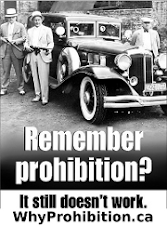
Side effects for Big Pharma drugs highlight the hypocrisy of Cannabis prohibition - if drugs with side effects like the ones in these videos can be sold legally then every health/harm arguement for keeping natural non-toxic Cannabis illegal is moot in my books.
"No one knows exactly how Depakote works" - Wait, what?
Side effect of blue or yellow skin...
And this drug is for.... thicker eyelashes?
Also read:
Big $$$, Big Pharma , Gossip Folks and
CONTROLLED PRESCRIPTION DRUGS VERSUS MEDICAL MARIJUANA
Showing posts with label Legal Prescription Drugs. Show all posts
Showing posts with label Legal Prescription Drugs. Show all posts
Saturday, May 8, 2010
Saturday, March 20, 2010
Gossip Folks
A Blog that is definitely worth checking out is "Pharma Gossip", it's got the lowdown on all the info that Big Pharma wants to keep on the downlow. I've been reading it for many months now and the blog is worth sharing with all of you.
A favourite *video, highlighting Big Pharma drugs and the hypocrisy of "Drug Free". *Note -some swearing in this video.
A favourite *video, highlighting Big Pharma drugs and the hypocrisy of "Drug Free". *Note -some swearing in this video.
Thursday, February 4, 2010
Conflict of Interest Much?
"Last October, the Harper government appointed Bernard Prigent to the governing council of the Canadian Institutes of Health Research, the federal agency that distributes about a billion dollars annually for health research. That appointment was met with near-universal condemnation from medical ethicists, because..."
Tuesday, October 6, 2009
Mother Knows Best
Marie Myung-Ok Lee deserves a Mother of the Year Award. In a society that still harbors much prejudice against cannabis and those who use it she is to be commended for ignoring the "Judgy Judgerson's" and doing what is best for her child.
Last May her article "Why I Give My 9-Year-Old Pot" was a true testament of a Mother's Love. Now Marie continues the story about her son "J" and her family's journey after discovering that one of the worlds oldest medicines has new found benefits.
Last May her article "Why I Give My 9-Year-Old Pot" was a true testament of a Mother's Love. Now Marie continues the story about her son "J" and her family's journey after discovering that one of the worlds oldest medicines has new found benefits.
LABELS -
Autism,
Cannabis,
Legal Prescription Drugs,
Medical Marijuana,
Mom,
Parenting,
Pot,
Writing


Tuesday, September 1, 2009
Soldiering On (Memorial Day Update)
He fought the war in Iraq, only to be persecuted by the Drug War at Home. Prohibition is making life hell for soldiers like Christopher Northcutt, brave heroes who proudly served their country and defend freedom for all of us. Our men and women who serve in the military deserve to use cannabis for medicine, but morally bent ideology and draconian drug laws are locking them up for using a plant that has never killed anyone.
Prescription medication deaths have become more exposed with the passing of Heath Ledger, Michael Jackson and DJ AM. It's time everyone put their judgment aside and face the facts - cannabis is a safer alternative to prescription drugs for many, and if their doctors approve then they have the right, as it says in the Declaration of Independence, to "Life, liberty and the pursuit of happiness." I wonder, would those celebrities still be alive if their doctors had been able to treat them with cannabis? It's an answer we'll never know, but still an important question to contemplate.
 Prohibition is inflicting more harm and heartache on society than drugs ever could. Here is a short excerpt, but please follow the link and read the whole story of Sgt. Northcutt's ordeal and how the unwinnable War on Drugs (or shall I say, war on people who use certain drugs) sent a marine to prison for growing medical marijuana in a patients collective.
From Alternet - Sgt. Northcutt's Post-Iraq Nightmare: Getting Arrested for Growing Pot
Gardner: How long were you on medical hold?
Northcutt: For a year. This is when they super-medicate me. I would be given a grocery bag full of really heavy shit. Hydrocodones and anti-depressants, Neurontin, Seroquel, anti-nightmare pills, half of it you get really fucking high on. I’m not much of a pillbilly but I’ve taken them all. And that is true of just about anyone I know who went to Iraq and has come back. They’re all pill experts. How the fuck does that happen? You get back and they just like push 10 pills on you right away.
Gardner: Were you dealing with Marine Corps doctors or the VA?
Northcutt: The Marine Corps. But I was also trying to deal with the VA because they sent me home awaiting orders. I go to live at my grandma’s in Long Beach and I’m chilling in the guest house while I’m waiting to get out of the Marine Corps. The VA Hospital is like a mile from my house and Camp Pendleton is two hours away in traffic. I’m drugged out all day long and they’re like, “You’ve got appointments on this day at Camp Pendleton.” I would just lie in bed all day, loaded. Totally fucked up. But it was cool because a doctor prescribed it. Read more...
As a footnote I'd like to add that Croatia has legalized the use of cannabis for its vets and Canada now covers the cost of medical marijuana for war veterans.
From Why Prohibition: Canadians for Safe Access, a patient advocacy organization, also commends Veterans Affairs Canada for this new policy. "For many, this medicine is more effective than the available alternatives, with fewer negative side-effects. It is so important that the cost for this medicine is covered for those in need," stated Rielle Capler, a director of Canadians for Safe Access. Veterans use cannabis for various medical conditions and symptoms including chronic and phantom limb pain, sleep disturbance, brain injuries, Post-traumatic stress disorder, anxiety and depression. ~
This clip from Botany of Desire does a fantastic job of explaining how and why medical cannabis can help soldiers and veterans suffering from post-traumatic stress disorder (PTSD).
While Canada's medical marijuana program still seems to be finding its way, at least they have recognized that Canadian soldiers deserve to have affordable access to this wonder plant. With this, we will have fewer people dying and becoming dependent on highly addictive prescription drugs. As it stands in the US, legal drugs are the fourth leading cause of death.
Here are the latest VA statistics about Iraq and Afghanistan War veterans:
- Veterans: 981,834 (out of nearly two million deployed)
- Veterans Treated at VA Hospitals and Clinics: 425,538 (43.3% of veterans)
- Veterans Diagnosed by VA with Mental Health Condition: 193,879 (45.6% of veterans treated by VA)
- Veterans Diagnosed by VA with PTSD: 114,908 (27.0% of veterans treated by VA)
- Veterans Filing Disability Claims Against VA: 381,782 (38.9% of veterans)
- Veterans with Approved PTSD Claims: 53,079 (46.2% of the veterans diagnosed by VA with PTSD) - Veterans for Medical Marijuana Access
Relevant UPDATE: VA doctors prohibited from prescribing medical pot March 31, 2010
UPDATE February 22, 2011:

US Navy Veteran To Challenge Missouri's Marijuana Law | Cannabis Culture Magazine
A disabled Navy Veteran who uses marijuana as medicine will fight for his right to use a medical defense in court after being arrested and charged with possession with intent to distribute. Ken Unger is a 100% disabled U.S. Navy veteran deemed unemployable by the St. Louis VA. He was hit in the head with a 50-ton crane hook while serving in Grenada in 1983.
Update April 30th, 2012:
While some restrictions are being lifted in states where medical marijuana is legal, Big Pharma drugs are still the go to for the majority of doctors prescribing medication to the military and Veterans.
U.S. military’s war with drugs: Drugs issued by military led to assaults, murders, doctors say
"After two long-running wars with escalating levels of combat stress, more than 110,000 active-duty army troops last year were taking prescribed antidepressants, narcotics, sedatives, antipsychotics and anti-anxiety drugs, according to figures recently disclosed to the Los Angeles Times by the U.S. army surgeon general."
"Julie Oligschlaeger said her son, Chad, a marine corporal based at Twentynine Palms, Calif. came home from his second tour in Iraq in 2007 complaining of nightmares and hallucinations. He was taking trazodone, fluoxetine, Seroquel, Lorazepam and propranolol, among other medications.
“I didn’t realize how many pills he was on until it was too late,” Oligschlaeger said. “He sometimes would slur his words, and I would think, ‘OK, are you drinking? What is going on?’ And he’d say, ‘Oh, I’m taking my pills, and I’m taking them when I’m supposed to.’ I never thought to look.”
In 2008, two months before Chad was scheduled to get out of the marines, start college and marry his fiancé, the young corporal was found dead on the floor of his room in the barracks. An autopsy concluded the death was accidental due to multiple-drug toxicity — interactions between too many drugs."
Please follow the link and read the whole article - the list of “EXAMPLE” PSYCHIATRlC FORMULARY FOR DEPLOYMENT is astounding!
Meanwhile....
medical cannabis - drug substitution: "Eighty five percent of the BPG [Berkeley Patients Group] sample reported that cannabis has much less adverse side effects than their prescription medications. Additionally, the top two reasons listed by participants as reasons for substituting cannabis for one of the substances previously mentioned were less adverse side effects from cannabis (65%) and better symptom management from cannabis (57.4%)."
Conclusion
A disabled Navy Veteran who uses marijuana as medicine will fight for his right to use a medical defense in court after being arrested and charged with possession with intent to distribute. Ken Unger is a 100% disabled U.S. Navy veteran deemed unemployable by the St. Louis VA. He was hit in the head with a 50-ton crane hook while serving in Grenada in 1983.
Update April 30th, 2012:
While some restrictions are being lifted in states where medical marijuana is legal, Big Pharma drugs are still the go to for the majority of doctors prescribing medication to the military and Veterans.
U.S. military’s war with drugs: Drugs issued by military led to assaults, murders, doctors say
"After two long-running wars with escalating levels of combat stress, more than 110,000 active-duty army troops last year were taking prescribed antidepressants, narcotics, sedatives, antipsychotics and anti-anxiety drugs, according to figures recently disclosed to the Los Angeles Times by the U.S. army surgeon general."
"Julie Oligschlaeger said her son, Chad, a marine corporal based at Twentynine Palms, Calif. came home from his second tour in Iraq in 2007 complaining of nightmares and hallucinations. He was taking trazodone, fluoxetine, Seroquel, Lorazepam and propranolol, among other medications.
“I didn’t realize how many pills he was on until it was too late,” Oligschlaeger said. “He sometimes would slur his words, and I would think, ‘OK, are you drinking? What is going on?’ And he’d say, ‘Oh, I’m taking my pills, and I’m taking them when I’m supposed to.’ I never thought to look.”
In 2008, two months before Chad was scheduled to get out of the marines, start college and marry his fiancé, the young corporal was found dead on the floor of his room in the barracks. An autopsy concluded the death was accidental due to multiple-drug toxicity — interactions between too many drugs."
Please follow the link and read the whole article - the list of “EXAMPLE” PSYCHIATRlC FORMULARY FOR DEPLOYMENT is astounding!
Meanwhile....
medical cannabis - drug substitution: "Eighty five percent of the BPG [Berkeley Patients Group] sample reported that cannabis has much less adverse side effects than their prescription medications. Additionally, the top two reasons listed by participants as reasons for substituting cannabis for one of the substances previously mentioned were less adverse side effects from cannabis (65%) and better symptom management from cannabis (57.4%)."
Conclusion
"The substitution of one psychoactive substance for another with the goal of reducing negative outcomes can be included within the framework of harm reduction. Medical cannabis patients have been engaging in substitution by using cannabis as an alternative to alcohol, prescription and illicit drugs." Source: Reiman, Amanda, "Cannabis as a Substitute for Alcohol and Other Drugs," Harm Reduction Journal (London, United Kingdom: December 2009).
*****
"Nearly all medicines have toxic, potentially lethal effects. But marijuana is not such a substance. There is no record in the extensive medical literature describing a proven, documented cannabis-induced fatality."
"This is a remarkable statement. First, the record on marijuana encompasses 5,000 years of human experience. Second, marijuana is now used daily by enormous numbers of people throughout the world. Estimates suggest that from twenty million to fifty million Americans routinely, albeit illegally, smoke marijuana without the benefit of direct medical supervision. Yet, despite this long history of use and the extraordinarily high numbers of social smokers, there are simply no credible medical reports to suggest that consuming marijuana has caused a single death."
"By contrast aspirin, a commonly used, over-the-counter medicine, causes hundreds of deaths each year."
“Marijuana, in its natural form, is one of the safest therapeutically active substances known to man.”
Excerpted from OPINION AND RECOMMENDED RULING, FINDINGS OF FACT, CONCLUSIONS OF LAW AND DECISION OF Administrative LAW JUDGE. FRANCIS L. YOUNG, Administrative Law Judge
"This is a remarkable statement. First, the record on marijuana encompasses 5,000 years of human experience. Second, marijuana is now used daily by enormous numbers of people throughout the world. Estimates suggest that from twenty million to fifty million Americans routinely, albeit illegally, smoke marijuana without the benefit of direct medical supervision. Yet, despite this long history of use and the extraordinarily high numbers of social smokers, there are simply no credible medical reports to suggest that consuming marijuana has caused a single death."
"By contrast aspirin, a commonly used, over-the-counter medicine, causes hundreds of deaths each year."
“Marijuana, in its natural form, is one of the safest therapeutically active substances known to man.”
Excerpted from OPINION AND RECOMMENDED RULING, FINDINGS OF FACT, CONCLUSIONS OF LAW AND DECISION OF Administrative LAW JUDGE. FRANCIS L. YOUNG, Administrative Law Judge
MEMORIAL DAY UPDATE, MAY 28th. 2012
More disappointment from the Obama administration! Men and women who fought for their country should not be persecuted this way!
'Use marijuana and go to prison' - Gil Kerlikowske's message to Veterans on Memorial Day

More disappointment from the Obama administration! Men and women who fought for their country should not be persecuted this way!
'Use marijuana and go to prison' - Gil Kerlikowske's message to Veterans on Memorial Day
(WASHINGTON DC) - The group Veterans For Medical Cannabis Access [VMCA] issued the following news release after receiving word that their long hours spent presenting scientific and medical evidence of the benefits of medical marijuana, was simply rejected yet again.
Relying on the wisdom of Gil Kerlikowske, the nation's 'drug czar', veterans are reminded on Memorial Day that their sacrifices only gain them a small amount of credibility, certainly not enough to allow them to use a plant that grows naturally out of the ground that is a miracle treatment for the survivors of war and military violence for their nation, who suffer PTSD, Post Traumatic Stress Disorder." - Excerpt, please read the whole article:
White House Statement on Medical Marijuana: Another Step Back for Veterans
"Vets have used cannabis for PTSD since the Revolutionary War. We know what we need and to be told by our President, the Commander in Chief, that he does not care about those he has sent to war by denying medicine to the wounded is unconscionable."

LABELS -
Big Pharma,
Cannabis,
Freedom,
Human Rights,
Iraq,
Legal Prescription Drugs,
Medical Marijuana,
Physicians,
Politics,
Pot,
Prison,
Prohibition,
PTSD,
Suicide,
The War on Drugs,
US,
War Veterans,
Weed
Tuesday, June 16, 2009
Cannabis and Cancer
All this week, "AC 360" is taking a close look at cannabis legalization in a series of reports. "America's High: The case for and against pot" delves into the debate - "Should we legalize pot? Can we afford not to?" Last night in the first of 5 segments, Grammy Award-winning singer-songwriter Melissa Etheridge spoke to Anderson Cooper about how she turned to medical marijuana to survive the horrible side effects of chemotherapy. She was diagnosed with breast cancer in 2004 and is now cancer-free.
The following is an edited version of the interview.
Taking a step further, scientific research has uncovered more hope in the fight against breast cancer. This study was published in the journal Molecular Cancer Therapeutics and primarily funded by the California Breast Cancer Research Program.
Marijuana Compound Shows Promise In Fighting Breast Cancer
 ScienceDaily (Nov. 26, 2007) "A compound found in cannabis may prove to be effective at helping stop the spread of breast cancer cells throughout the body. The study, by scientists at the California Pacific Medical Center Research Institute, is raising hope that CBD, a compound found in Cannabis sativa, could be the first non-toxic agent to show promise in treating metastatic forms of breast cancer.
“Right now we have a limited range of options in treating aggressive forms of cancer,” says Sean D. McAllister, Ph.D., a cancer researcher at CPMCRI and the lead author of the study. “Those treatments, such as chemotherapy, can be effective but they can also be extremely toxic and difficult for patients. This compound offers the hope of a non-toxic therapy that could achieve the same results without any of the painful side effects.”
 Pic Courtesy of Ed Rosenthal, THC Expo 2009
For more information on cannabis, breast cancer and medical research studies regarding this miracle plant fighting many more forms of cancer, please visit ShowMeTheFacts.org
To this day, the DEA and FDA dismiss Medical Benefit From Marijuana, regardless of DEA Administrative Law Judge Francis Young's monumental decision that cannabis (marijuana) should rightfully be placed in Schedule II or lower of the Controlled Substances Act to make it available by prescription. Nonetheless, the factual findings of his decision remain permanently on the record, and serve as a testimonial to his honest pursuit of the medical issues surrounding cannabis.
Highlights include:
- In strict medical terms marijuana is far safer than many foods we commonly consume. For example, eating 10 raw potatoes can result in toxic response. By comparison, it is physically impossible to eat enough cannabis to induce death.
- The evidence in this record clearly shows that cannabis has been accepted as capable of relieving the distress from great numbers of very ill people, and doing so with safety under medical supervision. It would be unreasonable, arbitrary and capricious for the DEA to continue to stand between those sufferers and the benefits of this substance in light of the evidence in this record.
The following is an edited version of the interview.
Melissa Etheridge: I'm actually grateful for my cancer diagnosis.
Anderson Cooper: Grateful because it changed your life?
Etheridge: It changed my life; woke me up totally.
Cooper: What is the pain [of chemotherapy] like?
Etheridge: It was just a general pain of your body dying, of all your cells dying. Your appetite is gone. And you are nauseous. And your hair is falling out. Your skin -- it's like death. And the only thing I could do is lay there. I can't -- it hurt to -- light hurt, sound hurt. I couldn't read anything. I just laid there.
(Etheridge didn't want to use Vicodin or other prescription pills, she said.)
All of these things have side effects. So, the steroids and the pain relief that they give you on that first day when you go into chemotherapy causes constipation. So they will -- here is a pill for the constipation which will give you diarrhea. And you get huge side effects from all of this.
Cooper: The first time you did [marijuana], it made a big difference?
Etheridge: Instantly -- and instantly within a minute relieves the nausea, relieves the pain. And all of a sudden I was normal. You don't take medicinal marijuana to get high.
Cooper: So you weren't getting high?
Etheridge: No you don't get a high. No it's not a high. It was normal. And I could -- all of a sudden I could get out of bed. I could go see my kid. And it was amazing. (Etheridge often didn't smoke; the marijuana was mixed into butter and spread on food, or run through a vaporizer.)
Cooper: Did you ever worry about becoming addicted? They were saying this is a gateway drug?
Etheridge: No. Not at all. If you were on that side, you would understand what I mean. It is almost laughable to think that you could be addicted. This is not at all.
Cooper: You mention you still have a prescription. Do you still use marijuana?
Etheridge: Yes, I do. The effects on my gastrointestinal system leave me with a real intolerance for acid of any kind, and so acid reflux is a constant problem. I don't want to take the little pills that they give you that have all the side effects to help with that.
And I do use it -- I'm one of the users that would like in a stressful situation or maybe when I've eaten that cheese pizza with my kids that I will do that and it settles -- totally completely settles all that.
Cooper: Most people eat the cheese pizza after the marijuana.
Etheridge: That is true.
Cooper: You've got it backwards.
Etheridge: No. It's not like that. I know.
Cooper: There's more than, I think, 200,000 people in California who are registered to receive medicinal marijuana. Do you really believe that all those people though have legitimate reasons to be getting marijuana? Etheridge: Yes. Who are we to say what a legitimate reason is? If it helps somebody at the end of the day instead of drinking a couple of glasses of wine, to have a few tokes, who are we to say? Why must we in this country be so judgmental about this? These people are not hurting anybody. They are not hurting themselves.Taking a step further, scientific research has uncovered more hope in the fight against breast cancer. This study was published in the journal Molecular Cancer Therapeutics and primarily funded by the California Breast Cancer Research Program.
Marijuana Compound Shows Promise In Fighting Breast Cancer
 ScienceDaily (Nov. 26, 2007) "A compound found in cannabis may prove to be effective at helping stop the spread of breast cancer cells throughout the body. The study, by scientists at the California Pacific Medical Center Research Institute, is raising hope that CBD, a compound found in Cannabis sativa, could be the first non-toxic agent to show promise in treating metastatic forms of breast cancer.
“Right now we have a limited range of options in treating aggressive forms of cancer,” says Sean D. McAllister, Ph.D., a cancer researcher at CPMCRI and the lead author of the study. “Those treatments, such as chemotherapy, can be effective but they can also be extremely toxic and difficult for patients. This compound offers the hope of a non-toxic therapy that could achieve the same results without any of the painful side effects.”
 Pic Courtesy of Ed Rosenthal, THC Expo 2009
For more information on cannabis, breast cancer and medical research studies regarding this miracle plant fighting many more forms of cancer, please visit ShowMeTheFacts.org
To this day, the DEA and FDA dismiss Medical Benefit From Marijuana, regardless of DEA Administrative Law Judge Francis Young's monumental decision that cannabis (marijuana) should rightfully be placed in Schedule II or lower of the Controlled Substances Act to make it available by prescription. Nonetheless, the factual findings of his decision remain permanently on the record, and serve as a testimonial to his honest pursuit of the medical issues surrounding cannabis.
Highlights include:
- In strict medical terms marijuana is far safer than many foods we commonly consume. For example, eating 10 raw potatoes can result in toxic response. By comparison, it is physically impossible to eat enough cannabis to induce death.
- Marijuana, in its natural form, is one of the safest therapeutically active substances known to man. By any measure of rational analysis cannabis can be safely used with a supervised routine of medical care.
- A smoker would theoretically have to consume nearly 1,500 pounds of cannabis within about 15 minutes to induce a lethal response. In practical terms, cannabis cannot induce a lethal response as a result of drug-related toxicity.- The evidence in this record clearly shows that cannabis has been accepted as capable of relieving the distress from great numbers of very ill people, and doing so with safety under medical supervision. It would be unreasonable, arbitrary and capricious for the DEA to continue to stand between those sufferers and the benefits of this substance in light of the evidence in this record.
The administrative law judge recommends that the Administrator conclude that the cannabis plant consid-ered as a whole has a currently accepted medical use in treatment in the United States, that there is no lack of accepted safety for use of it under medical supervision and that it may law-fully be transferred from Schedule I to Schedule II. The judge recommends that the Administrator transfer cannabis from Schedule I to Schedule II.
Friday, May 1, 2009
Big $$$, Big Pharma
For those of you who haven't yet seen or heard of
"Big Bucks, Big Pharma - Marketing Disease & Pushing Drugs" I recommend viewing it to everyone. The Official Selection of the 2008 Catalysts for Change Film Festival and the 2006 Rencontres internationales du documentaire de Montreal is eye-opening and informative and really, just one of those things you would consider a "Must See".
The YouTube Info:
"Big Bucks, Big Pharma pulls back the curtain on the multi-billion dollar pharmaceutical industry to expose the insidious ways that illness is used, manipulated, and in some instances created, for capital gain. Focusing on the industry's marketing practices, media scholars and health professionals help viewers understand the ways in which direct-to-consumer (DTC) pharmaceutical advertising glamorizes and normalizes the use of prescription medication, and works in tandem with promotion to doctors. Combined, these industry practices shape how both patients and doctors understand and relate to disease and treatment. Ultimately, Big Bucks, Big Pharma challenges us to ask important questions about the consequences of relying on a for-profit industry for our health and well-being."
Below is Part One, please follow this link to view the whole documentary. It is worth taking the time to watch it.
From the video: "The companies that make up the Pharmaceutical Industry are among the largest corporations in the world. In 2004 their combined global sales were over half a TRILLION (emphasis is mine) dollars, with Pfizer and Johnson & Johnson leading the pack. Together these business have come to be known as "Big Pharma"."
"Big Bucks, Big Pharma - Marketing Disease & Pushing Drugs" I recommend viewing it to everyone. The Official Selection of the 2008 Catalysts for Change Film Festival and the 2006 Rencontres internationales du documentaire de Montreal is eye-opening and informative and really, just one of those things you would consider a "Must See".
The YouTube Info:
"Big Bucks, Big Pharma pulls back the curtain on the multi-billion dollar pharmaceutical industry to expose the insidious ways that illness is used, manipulated, and in some instances created, for capital gain. Focusing on the industry's marketing practices, media scholars and health professionals help viewers understand the ways in which direct-to-consumer (DTC) pharmaceutical advertising glamorizes and normalizes the use of prescription medication, and works in tandem with promotion to doctors. Combined, these industry practices shape how both patients and doctors understand and relate to disease and treatment. Ultimately, Big Bucks, Big Pharma challenges us to ask important questions about the consequences of relying on a for-profit industry for our health and well-being."
Below is Part One, please follow this link to view the whole documentary. It is worth taking the time to watch it.
From the video: "The companies that make up the Pharmaceutical Industry are among the largest corporations in the world. In 2004 their combined global sales were over half a TRILLION (emphasis is mine) dollars, with Pfizer and Johnson & Johnson leading the pack. Together these business have come to be known as "Big Pharma"."
Thursday, April 16, 2009
Governments Spend Billions of $$$ a Year Fighting a Plant That Hasn't Killed Anyone - Ever.
"A smoker would theoretically have to consume nearly 1,500 pounds of marijuana within about fifteen minutes to induce a lethal response."
~In The Matter of MARIJUANA RESCHEDULING PETITION
by FRANCIS L YOUNG, Administrative Law Judge
"Findings of Fact, Conclusions of Law and Decision." for the United States Department of Justice and Drug Enforcement Agency (DEA)
September 6, 1988
~In The Matter of MARIJUANA RESCHEDULING PETITION
by FRANCIS L YOUNG, Administrative Law Judge
"Findings of Fact, Conclusions of Law and Decision." for the United States Department of Justice and Drug Enforcement Agency (DEA)
September 6, 1988
When Alcohol, Nicotine, Prescription Drugs and even Coffee KILL thousands upon thousands of people every year, how can it be that Cannabis is illegal? 100% of the studies done at dozens of American universities and research facilities show medical history does not record anyone dying from an overdose of marijuana (UCLA, Harvard, Temple, etc.) But here it is, almost TWENTY-ONE Years after this study was released and countries the world over are still waging an unwinnable "War on Cannabis".
Please read and pass on Jack Herer's "How Dangerous is Marijuana Compared with other Substances?" and ask yourself just how any government, knowing this information, can justify keeping cannabis illegal especially when alcohol and cigarettes are not. Ask yourself why those substances are legal and cannabis is not.
If citizens could cheaply grow their own medicine, and grow their own recreational herb, this would not sit well with Big Pharma and Big Alcohol. Legalizing cannabis also threatens the livelihoods of law enforcement (DEA, RCMP), government prosecutors, defense lawyers, and incarceration facilities with the loss of BILLIONS of dollars a year that they receive in the "PROHIBITION INDUSTRY".
Regardless of the American origin of this information, I believe these same truths apply to Canada as well.
Blog Update: Please check out this new book comparing alcohol and cannabis.
Former Seattle Police Chief Norm Stamper of Law Enforcement Against Prohibition discusses the highly acclaimed new book, "Marijuana Is Safer: So why are we driving people to drink?", to which he contributed the foreword.
LABELS -
Alcohol,
Cannabis,
Causes of Death,
Coffee,
Comparing Drugs,
Jack Herer,
Legal Prescription Drugs,
Marijuana,
Nicotine,
Pot
Subscribe to:
Posts (Atom)


 Posts
Posts